Post Divorce Applications
When court orders are not complied with or no longer workable
A divorce order does not always end legal issues between parties.
Where circumstances change or court orders are not complied with, post-divorce applications may be necessary.
What are Post-Divorce Applications
Post-divorce applications are court applications made after a divorce order has been granted, usually to:
Enforce existing court orders which has been disobeyed;
Modify orders that have become impractical;
Ensure compliance with maintenance obligations
These applications are assessed based on facts, evidence, and legal requirements.
Types of Post-Divorce Applications
We assist with the following post-divorce applications:
- Contempt Application
- Variation Application
- Attachment Proceedings
- Garnishee Proceedings
Contempt Application
A contempt application may be filed where a party fails to comply with a court order, despite having the ability to do so.
This may include failure to:
Pay maintenance as ordered;
Comply with custody or access orders;
Obey specific court directions
The purpose of a contempt application is to compel compliance with court orders and uphold the authority of the court.
The court may imprison the defaulter if the extend of the non-compliance is severe.
🔗 Learn more about Contempt Applications

Variation Application
A variation application may be filed where there is a material change of circumstances that makes an existing court order difficult or impracticable to comply with.
This may arise due to:
Change in income or employment
Change in financial circumstances
Change in needs of children or parties
The court will assess whether the change is genuine and sufficient to justify a variation.
🔗 Learn more about Variation Applications

Attachment Proceedings
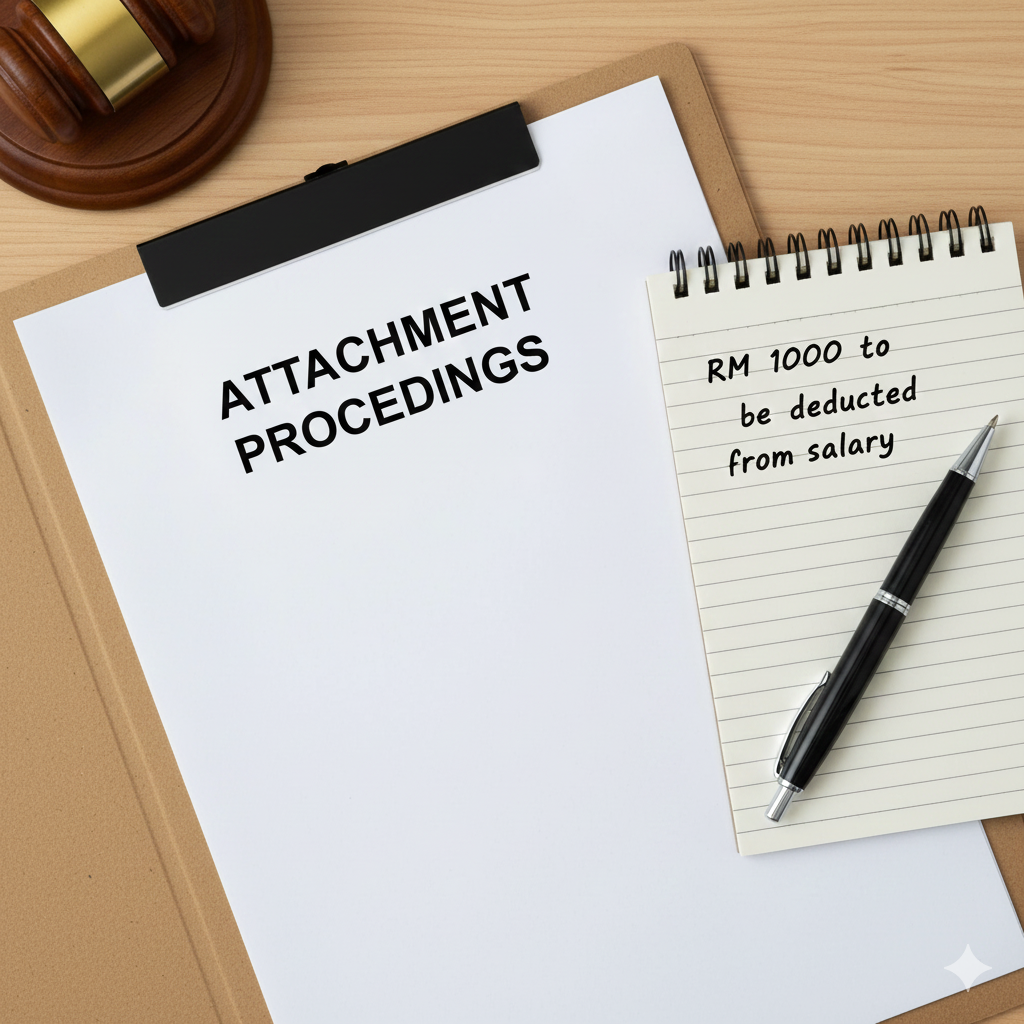
Attachment proceedings involve an application to the court for direct deduction of maintenance from the paying party’s salary.
Once granted, the employer is directed to:
Deduct the maintenance sum directly from the salary
Credit the amount into the recipient’s bank account
This application is often used where maintenance payments are inconsistent or repeatedly defaulted.
🔗 Learn more about Attachment Proceedings
Garnishee Proceedings
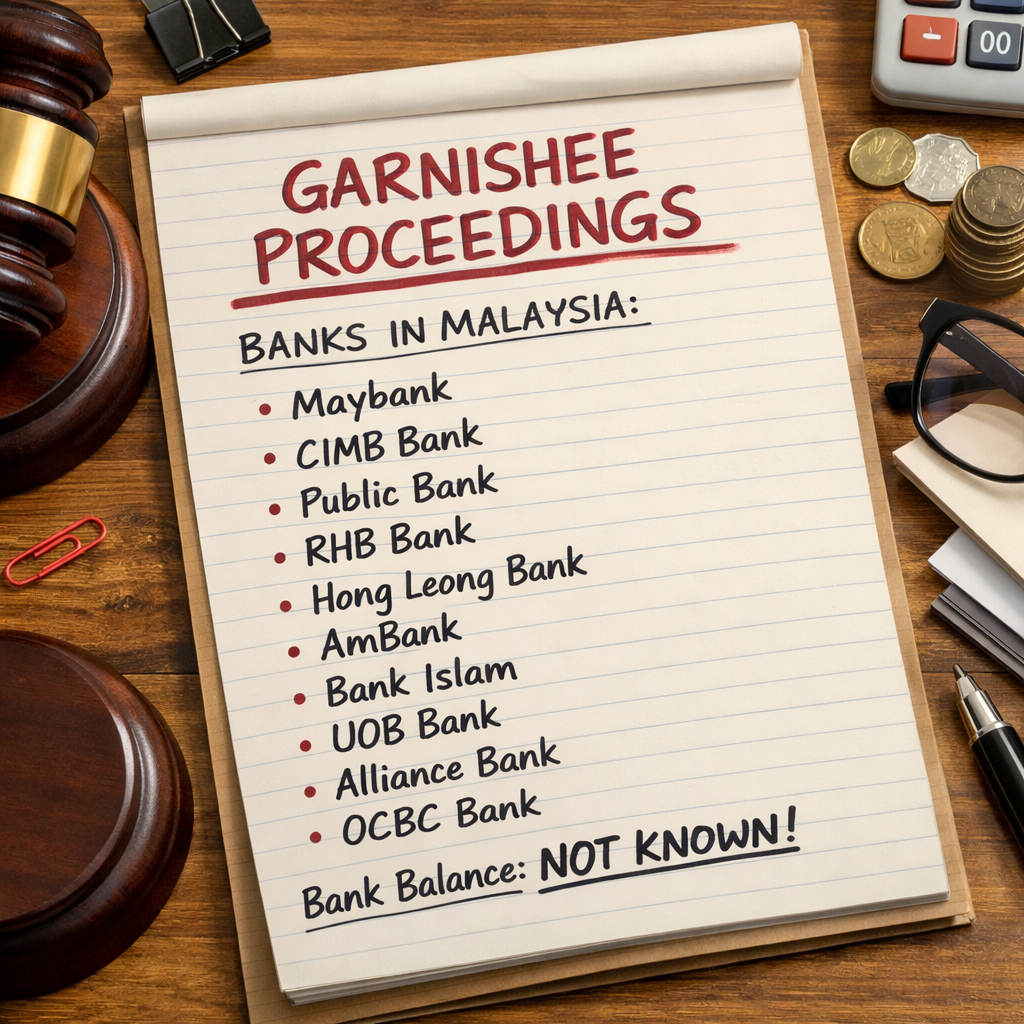
Garnishee proceedings may be applied where there is a substantial default in payment, and the defaulting party holds monies in a bank account.
This application allows the court to:
Direct a bank to freeze and release monies held by the defaulting party
Satisfy the outstanding sum from those funds
The applicant does not need to know the account number.
It is sufficient to identify the bank where the monies are held.
Garnishee proceedings are commonly used where:
The arrears are significant
Salary deduction is ineffective or unavailable
The defaulting party has sizeable funds in bank accounts
🔗 Learn more about Garnishee Proceedings
Why Post-Divorce Applications Matter
Post-divorce applications help to:
Enforce compliance with court orders
Address changes that affect fairness or practicality
Reduce ongoing disputes between parties
Provide legal certainty and structure
They ensure that court orders remain effective and relevant.
Our Approach
Post-divorce applications require careful assessment and proper documentation.
We focus on:
Evaluating whether an application is appropriate
Advising on the correct legal route
Preparing structured and compliant court documents
Guiding clients through court proceedings clearly
Each application is assessed based on its own facts.
If a court order is no longer workable or has not been complied with, a proper legal assessment is the first step.
Direct your concern to us. Our team of professional is ready to guide.
© 2025 All Rights Reserved by Chambers of S Sakthi.